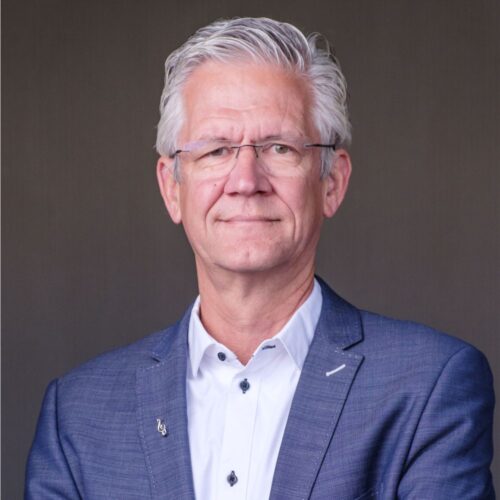
Bert Klumperman studied Chemical Engineering and Chemistry at the University of Twente (Enschede, NL) and holds two doctorates (PhD from Eindhoven, NL; DSc from Stellenbosch, SA). He has worked for 9 years in industry and now for 30 years in academia. He is a Distinguished Professor in Polymer Chemistry and received many awards, including the National Science and Technology Forum (NSTF) Lifetime Award and the John FW Herschel medal of the Royal Society of South Africa.
He is co-founder and CTO of Nanosene (Pty) Ltd, a spin-off company from Stellenbosch University, based on research in his research group.
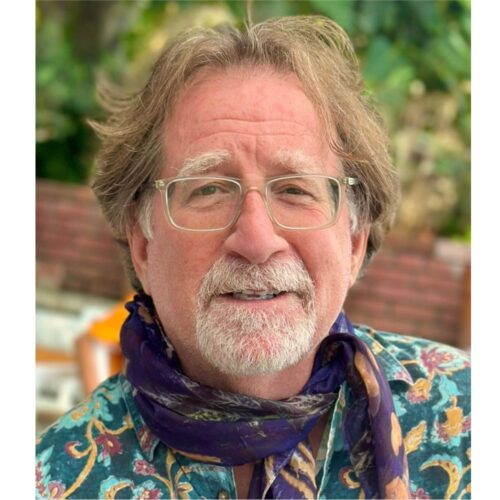
Michael Overduin leads a structural biology lab focussed on how proteins recognize lipid signals within biological membranes. He has been a Professor in the Department of Biochemistry at the University of Alberta since 2015. He established the SMALP Network as an open innovation community for developing polymer-based native nanodisc technology, and DiscoveryLab as a forum that connects entrepreneurial researchers with business advisors and investors. He was Professor of Structural Biology at the University of Birmingham and Executive Director of the Henry Wellcome Building for NMR Spectroscopy from 2003-2015. Michael established his first lab at the University of Colorado in 1995 after postdoctoral research at the University of Toronto from 1993-1995 and obtaining his PhD at The Rockefeller University in 1993.
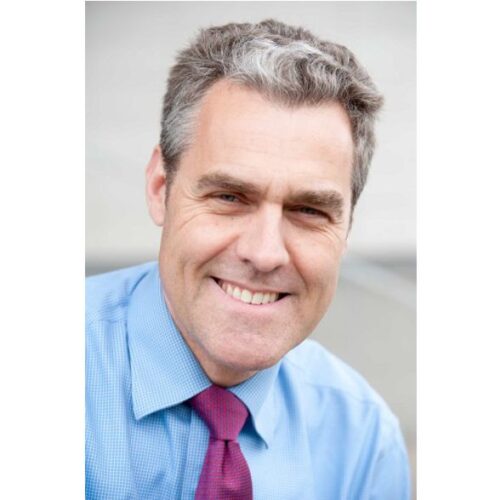
Barry D. Bruce is Professor of Biochemistry and Cellular & Molecular Biology at the University of Tennessee, Knoxville, with joint appointments in Microbiology and Chemical & Biomolecular Engineering. His research centers on the structure, function, and assembly of bioenergetic membrane protein complexes, with particular emphasis on photosynthetic systems in their native lipid environments and on membrane protein biophysics. His laboratory has been at the forefront of developing and applying detergent-free approaches for membrane protein isolation, including SMALPs and related native membrane nanoparticle systems, and has contributed to the synthesis and functional application of novel copolymers for extracting and stabilizing membrane protein complexes directly from native membranes. A major focus of his work is the isolation and characterization of Photosystem I (PSI) in near-native states, providing new insights into lipid-protein interactions, cofactor organization, and membrane-dependent photosynthetic function. He was the founding organizer of the 1st Conference on Native Membrane Nanoparticles in Knoxville, Tennessee, and is one of the SMALP Network Co-Directors. Dr. Bruce has authored over 120 peer-reviewed publications, holds three U.S. patents, is an AAAS Fellow, and is the Founder and President of the North American Photosynthesis Conference Association (NAPCA). His current work bridges membrane biochemistry, protein biophysics, polymer chemistry, and structural biology to advance native membrane nanoparticles as a transformative platform for studying complex biological systems.
Barry D. Bruce is Professor of Biochemistry and Cellular & Molecular Biology at the University of Tennessee, Knoxville, with joint appointments in Microbiology and Chemical & Biomolecular Engineering. His research focuses on bioenergetic membrane protein complexes, especially photosynthetic systems in their native lipid environments and membrane protein biophysics. His laboratory has helped advance detergent-free membrane protein isolation using SMALPs and related native membrane nanoparticle systems and has contributed to the synthesis and application of novel copolymers for extracting and stabilizing membrane protein complexes directly from native membranes. A major focus of his work is the isolation and characterization of Photosystem I (PSI) in near-native states, revealing new insights into lipid-protein interactions and membrane-dependent photosynthetic function. He was the founding organizer of the 1st Conference on Native Membrane Nanoparticles in Knoxville, Tennessee, and is one of the SMALP Network Co-Directors. Dr. Bruce is an AAAS Fellow, holds three U.S. patents, and is Founder and President of the North American Photosynthesis Conference Association (NAPCA).
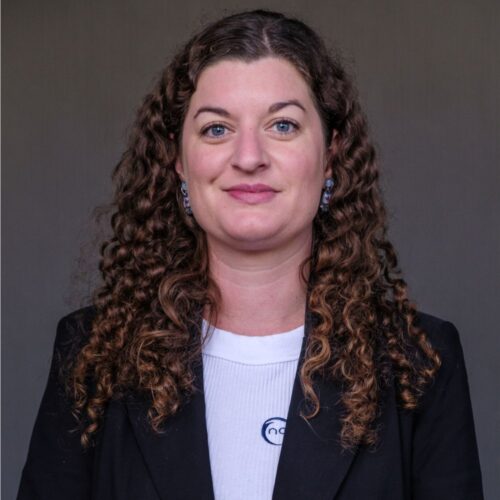
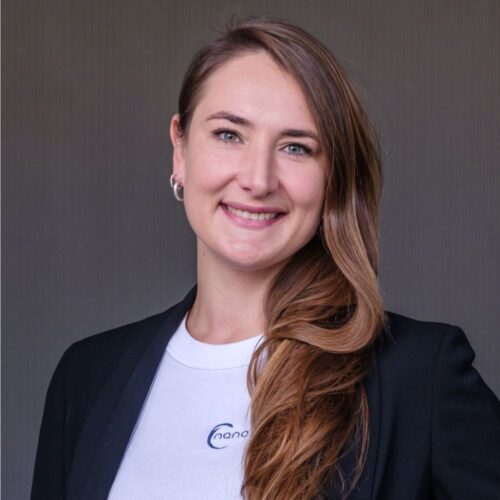
Dr. Elaine Barnard holds a PhD in Polymer Science from Stellenbosch University (2016-2020). She carried a postdoctoral fellowship at KU Leuven (2020-2021) and previously worked at Nanodyn Systems (Pty) Ltd (2023-2024). Her current research focuses on development and optimization of polymers for membrane protein isolation.
She is currently COO of Nanosene (Pty) Ltd, a spin-off company from Stellenbosch University. She is also a Researcher in the Klumperman group where she focuses on the processes for RAFT-mediated synthesis of poly(styrene-alt-maleic anhydride)
Bert Klumperman studied Chemical Engineering and Chemistry at the University of Twente (Enschede, NL) and holds two doctorates (PhD from Eindhoven, NL; DSc from Stellenbosch, SA). He has worked for 9 years in industry and now for 30 years in academia. He is a Distinguished Professor in Polymer Chemistry and received many awards, including the National Science and Technology Forum (NSTF) Lifetime Award and the John FW Herschel medal of the Royal Society of South Africa.
He is co-founder and CTO of Nanosene (Pty) Ltd, a spin-off company from Stellenbosch University, based on research in his research group.
Dr. Gestél Kuyler is a polymer scientist and entrepreneur with a dual-award PhD in Polymer Science from Stellenbosch University and in Molecular Pharmacology from Coventry University (2020-2024). Her research focuses on developing polymers for membrane protein isolation, particularly G-Protein Coupled Receptors (GPCRs), which has led to an international patent.
She is the co-founder and CEO of Nanosene (Pty) Ltd, a spin-off based on her PhD research, which launched its first commercial product in the USA in 2023. Gestél has been recognized for her entrepreneurial success, winning the Academia Industry Training Swiss-African Science Public Vote Award in 2024.
She also serves as a Research Manager in the Klumperman Group at Stellenbosch University, where she supports research development and supervision. Her work has been presented at several international conferences, and she continues to innovate at the intersection of science and industry.